The Phoenix Trail - Traffic Free Cycling
Description
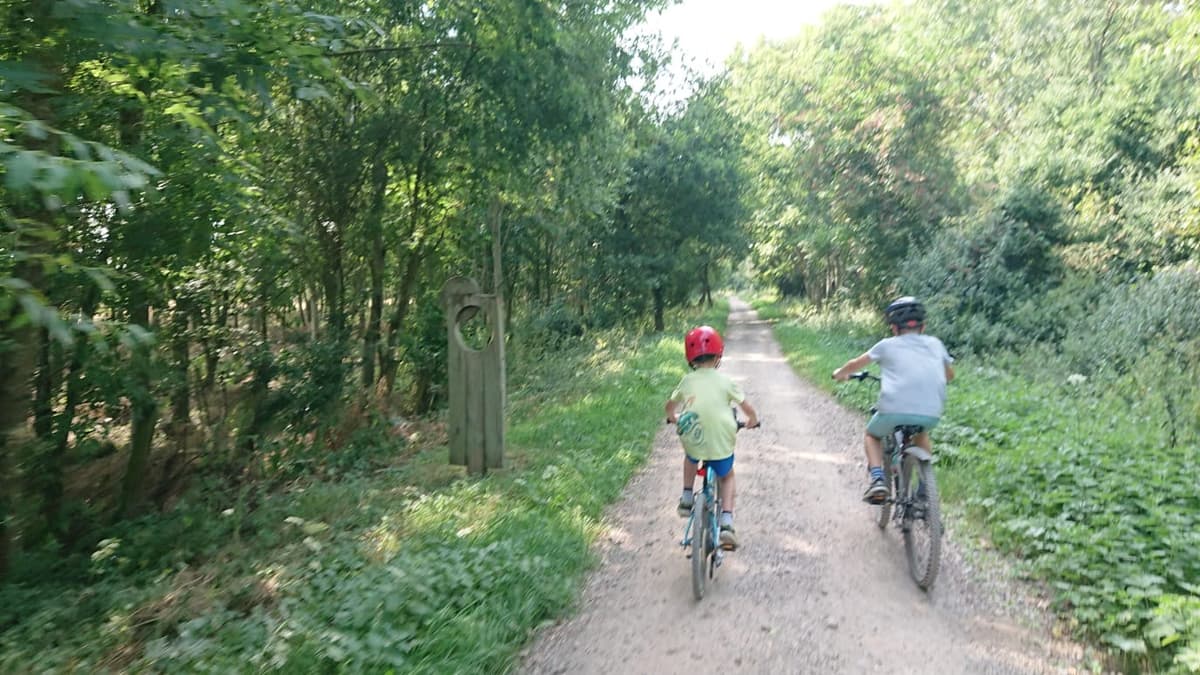
The Phoenix Trail is a flat, traffic‑free greenway following a former railway line between the market towns of Thame and Princes Risborough, making it an easy, confidence‑building ride or walk for the whole family. Wide, well‑surfaced paths welcome bikes, scooters, pushchairs and wheelchairs, so siblings, grandparents and buggies can all move at the same relaxed pace. Sculpted wooden seats appear every few hundred metres, turning natural pauses for little legs into mini adventures where you can sit together, share snacks and simply look out at the open fields and big Chiltern skies.
Because the trail is completely free from motor traffic along its main section, children can practise riding more independently while still feeling held within a clearly defined, car‑free corridor. The route is almost entirely level, so the outing becomes about being together rather than “getting up the hill,” which lowers the pressure for less confident cyclists or younger children on balance bikes. Along the way, families can spot the red kites that thrive in this landscape, listen for birdsong, and notice how the views change from town edges to open countryside and back again.
Art is woven into the day: around 30 artworks and sculptural seats, created to reflect the old railway and the surrounding Chiltern scenery, are scattered along roughly five miles of trail. Children can turn these into a playful treasure hunt—“Which sculpture will we reach next?”—while parents enjoy rare stretches of unhurried conversation as everyone moves in the same direction together. With a welcoming market town at each end, you can book‑end the ride with a café stop, an ice cream, or a simple wander through the high street before heading back.
Surfaces vary from tarmac out of Thame to firm compacted limestone further along, but remain suitable for family cycling and most pushchairs, with some steeper ramps where wheelchair users may need extra support. Access points, nearby car parks and a clearly way‑marked route make it a low‑admin, high‑connection kind of day: pack a simple picnic, choose how far you want to go, and let the gentle rhythm of wheels turning side by side create its own family story
BEBOND Score
🔆🔆🔆🔆
Theme
Age
Approximate location
County Location
Oxfordshire
Facilities
What will your child experience?
BEBOND Score 38 / 60
On the Phoenix Trail, your child gets the rare chance to move freely in a big, open space while still feeling safely held by you and the path itself. It’s an experience of shared momentum - pedalling, chatting, noticing sculptures and red kites together - that quietly builds confidence, curiosity and a sense of “we can do this as a family.”
BOND - 8 / 10
Riding or walking side by side, with no traffic to shout over or screens to compete with, creates long, gentle stretches of one‑to‑one attention. Children feel seen as you match their pace, celebrate small wins (“You rode to the next sculpture!”) and respond to their ideas about when to stop, snack or turn back. These shared micro‑moments - hands on handlebars, occasional high‑fives at rest points, a cuddle on a bench when someone gets tired - strengthen their sense that time with you is warm, responsive and predictable.
EXPLORE - 7 / 10
The trail invites natural exploring: How far is the next sculpture? Can we spot a red kite from its reddish‑brown body and forked tail? What happens if we free‑wheel down this tiny slope? Children experiment with their speed, balance and stamina on a route that feels safely contained, which encourages self‑directed “What if?” questions rather than adult‑led instructions. They also explore a new kind of space - a long, straight line through countryside - building a mental map of distance, direction and how places connect.
BUILD - 4 / 10
Although this isn’t a constructing‑with‑hands experience, children are building inner capacities: endurance, coordination and planning (“If we ride to the next seat, then we can rest”). Managing gears or brakes, judging how close to ride to a sibling, and adjusting to different surfaces (tarmac then limestone) all strengthen executive function and motor skills in real‑world conditions. For younger ones on scooters or balance bikes, simply staying steady over a longer stretch is a tangible, body‑felt achievement they can carry into other activities.
OBSERVE - 7 / 10
The trail naturally slows children into noticing: the pattern of fields, the sound of tyres on different surfaces, the way the Chiltern Hills appear and disappear on the horizon. Sculptures and seats provide built‑in “pause points” for reflection - time to ask how their body feels, what they’ve spotted in the sky, or which part of the ride they liked most. These small check‑ins help children practise tuning into their own sensations and emotions (“I’m tired; I feel proud; I was a bit nervous at that ramp”) in a calm, supportive context.
NURTURE - 6 / 10
Because the route is shared with walkers, wheelchair users and horse riders, children get to practise being considerate users of a shared space - slowing down, giving room, using a bell kindly. Waiting for a younger sibling, offering a snack at a rest stop or cheering someone up after a wobble all build everyday empathy and care. Noticing wildlife - especially the red kites that thrive along the trail - reinforces a lived sense that this isn’t just “our track” but a home for other creatures too.
DREAM - 6 / 10
Long, gently repetitive movement opens up space for imagination: children can invent stories about the old trains that once ran here, or pretend each sculpture is a station in a world of their own making. With fewer immediate demands on their attention, their minds are free to wander - counting red kites, renaming the benches, or dreaming up “next time let’s…” plans. This blend of physical rhythm and open sky supports the kind of loose, creative thinking that often gets squeezed out of more structured activities.
What's in it for us, the parents?
BEBOND Score 38 / 60
For parents, the Phoenix Trail offers something rare: a low‑effort, low‑noise environment where you can move your body, breathe deeply and be genuinely present with your child without constant micro‑stressors. It’s restorative time outdoors that also feels purposeful - you’re doing something good for them and quietly good for you.
BOND - 8 / 10
The simplicity of “we’re all just moving in the same direction” creates long, unbroken stretches of side‑by‑side time that are hard to find in everyday life. Without traffic, phones or complex logistics, you can tune into your child’s voice, questions and humour, which deepens your sense of connection and mutual enjoyment. Many parents experience this kind of shared rhythm - matching their child’s pace, stopping together, laughing at the same sculpture - as emotionally grounding and quietly replenishing.
EXPLORE - 7 / 10
The trail gives you your own dose of curiosity: noticing new artworks, reading small route details, or simply discovering a part of the Chilterns you may have only ever driven past. Moving through a new environment at human speed often sparks fresh questions and ideas, nudging you out of autopilot and into a more awake, engaged state of mind. Planning how far to go, choosing where to stop, or deciding whether to explore one of the towns at either end also exercises your own sense of playful agency rather than “just facilitating” the children.
BUILD - 4 / 10
While you’re not building a physical object, you are actively building family habits and your own physical capacity: gentle cardio, joint movement, and the confidence that “we can do this kind of outing.” Pacing the ride, adjusting layers for the kids, and managing snacks and breaks all strengthen your practical problem‑solving muscles in a context that is relatively low‑stakes and pleasant. Over time, these experiences contribute to a more robust sense of competence - “I can host outdoor days like this” - which supports overall resilience.
OBSERVE - 7 / 10
The linear, almost meditative nature of the path invites you into genuine present‑moment awareness: the feel of the air, the sound of tyres, the sight of a red kite circling overhead. With fewer competing demands, you can actually observe your child - how they ride, how they cope with effort, what lights them up - rather than simply managing them. Many parents find that this kind of gentle noticing leads to a quieter mind and a soft “downshift” in nervous system activation by the end of the outing.
NURTURE - 6 / 10
Supporting your child through small challenges on the trail - tired legs, a tricky ramp, a moment of frustration - gives you real‑time practice in offering calm, compassionate care. Being kind to yourself when plans change (“We turned back earlier than I’d hoped, and that’s okay”) is its own act of self‑compassion, especially in a culture that often demands perfection from parents. Sharing food on a bench, checking in on how everyone feels, and thanking your body for what it’s just done all reinforce your identity as a caring, attuned adult - not just a logistics manager.
DREAM - 6 / 10
The unhurried nature of the trail can loosen mental knots; ideas about future weekends, holidays or broader life decisions often arise more easily when you’re in motion under open sky. Joining your child in small imaginative games - naming sculptures, inventing stories about the old railway - gives you permission to step briefly out of “adult mode” and into play. This light‑heartedness, even in tiny bursts, is protective: it lowers cortisol, boosts mood and reminds you that joy and creativity still have a place in family life.