Oxford University Museum of Natural History
Description
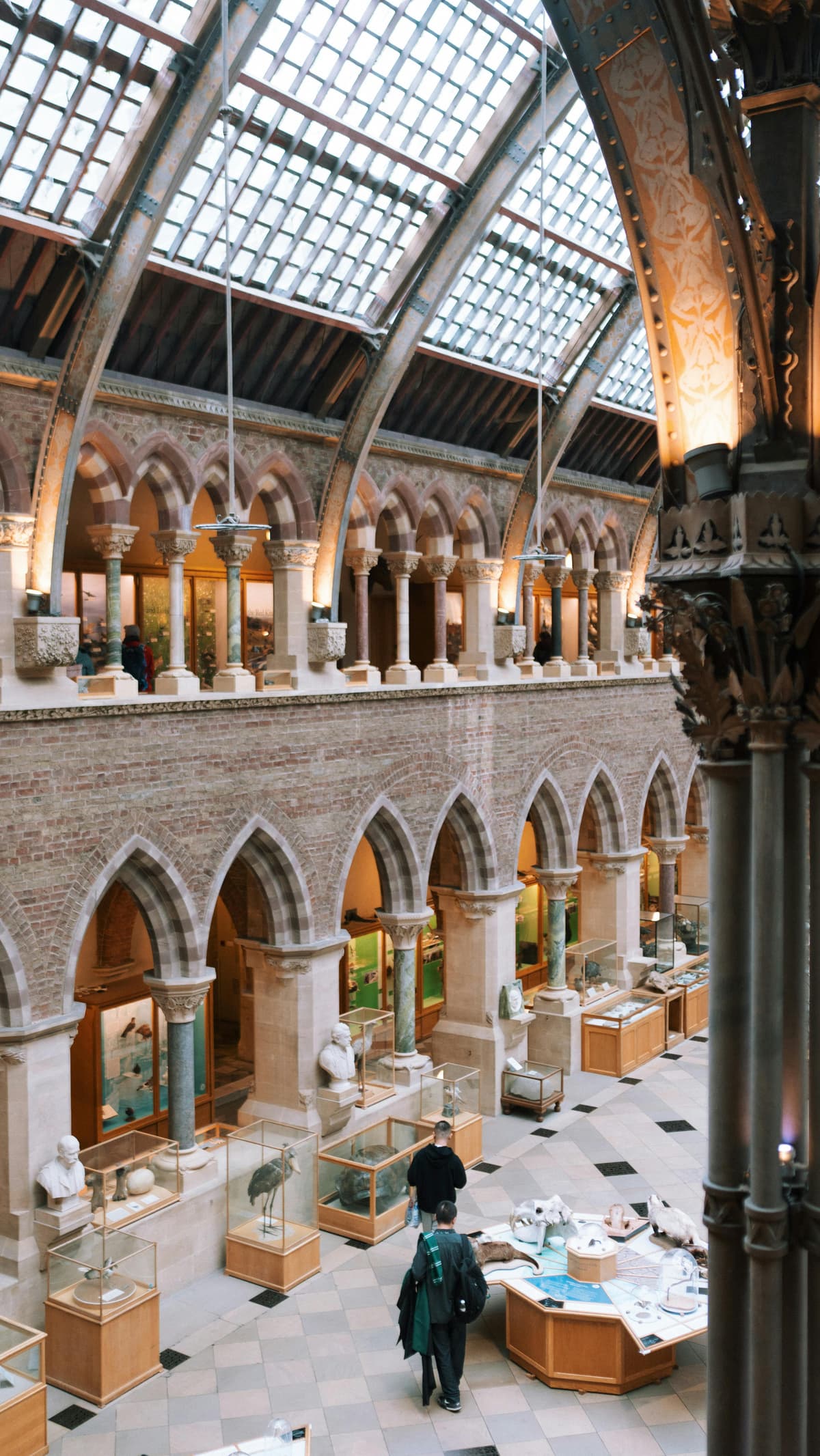
Step into the Oxford University Museum of Natural History and you step into a light‑filled “cathedral to science” where dinosaurs, dodos and glittering minerals all share the same soaring glass roof. Families are greeted at ground level by life‑size skeletons, cabinets of creatures and touchable specimens that instantly hook children of all ages. Entry is free and the scale is manageable, so you can slow down, follow your child’s curiosity and still feel you’ve seen “a whole museum” in one visit.
This is a place designed with families in mind: there are family trails on clipboards, with pencils, that turn the visit into a shared treasure hunt rather than a march past glass cases. Younger children can follow dinosaur or animal trails, hunt for hidden mice in the architecture, or simply move from the strokeable Shetland pony to the fox, bear and giant ammonite, learning through hands, not just eyes. Older kids and teens can dive deeper into evolution, human ancestors, meteorites and minerals, asking the big “how does the world work?” questions.
Because so many objects are at child height and some are explicitly there to be touched, even toddlers can meaningfully join in rather than just being pushed around. There is space for buggies, baby‑change facilities and lifts, so parents with younger children or mixed‑age siblings can relax about logistics and focus on being present.
The museum invites you to wander together rather than follow a strict route: one moment you are under the T. rex skeleton, the next you are peering at a real beehive behind glass, or watching your child marvel at a meteorite that is older than they can imagine. The building itself – with its iron arches, carved stone columns and statues of scientists – becomes part of the adventure. You can dip in for an hour or spend most of the day exploring; with regular weekend family activities like Science Saturdays and Family Friendly Sundays, there is often something hands‑on happening as well.
When everyone needs a pause, there is a café upstairs and a shop with science‑themed books and toys on the ground floor. That makes it easy to punctuate your visit with a shared treat, a quick reset for little legs or a moment to sit and chat about what you have just seen. Overall, this is a gentle but rich day out: low on stress and queues, high on shared wonder, conversation and the feeling of discovering the natural world together.
BEBOND Score
🔆🔆🔆🔆🔆
Age
Theme
County Location
Oxfordshire
Access
Drop-in Welcome
Approximate location
What will your child experience?
BEBOND Overall Score 47 / 60
For children, the museum is an invitation to touch, look closely and ask endless questions about animals, dinosaurs, rocks, insects and our own species. It offers the right mix of “wow” moments and quieter corners, with trails and hands‑on elements that turn learning into play rather than a lesson.
Bond - 8 / 10
Walking through the galleries side by side, your child has your full attention as they point, ask “why?” and pull you towards the next discovery, reinforcing the feeling of being seen and heard.
Shared trails, joint decisions about which section to visit next and pausing together at favourite specimens (the T. rex, the dodo, the beehive) build small, repeated moments of emotional security.
Explore - 9 / 10
Dinosaurs, giant fossils, live insects, a working beehive and meteorites offer powerful novelty, feeding your child’s natural drive to explore and compare “then and now,” “here and far away.”
Free family trails and weekend events like Science Saturdays and Family Friendly Sundays invite children to search, notice patterns and discover hidden details, strengthening curiosity as a habit.
Build - 6 / 10
Planning how to “complete” a trail, finding items in the right order and navigating between cases help children practise executive skills like planning, working memory and flexible thinking, even without traditional “making.”
Interacting with scientists during family events, or piecing together what different fossils and skeletons tell us, lets children build mental models of the natural world and how science works.
Observe - 9 / 10
From low‑level windows to strokeable fossils and animals, the museum encourages children to slow down and really look: counting teeth, comparing bones, noticing colours in butterflies or minerals.
Watching live insects and bees at close range, or tracing the shapes of skeletons, gives children practice in focused attention and noticing detail – key ingredients of mindful observation.
Nurture - 7 / 10
Encounters with fossils of extinct animals, live creatures behind glass and stories of changing environments open gentle conversations about caring for nature and respecting other forms of life.
Moving at each other’s pace, navigating a busy but contained public space and sharing snacks or rests help children internalise models of everyday care, both given and received.
Dream - 8 / 10
Standing under towering dinosaurs or looking at deep‑time fossils naturally sparks imaginative “what if?” questions – about ancient worlds, future discoveries or the child’s own place in the story of life.
The architecture, statues and stories of scientists invite pretend play and narrative: your child can cast themselves as a palaeontologist, explorer or inventor, expanding their sense of what they might become.
What's in it for us, the parents?
BEBOND Overall Score 44 / 60
For parents, this visit is low‑cost, low‑stress and high on shared curiosity. It offers an easy way to step away from screens, move your body, learn something new alongside your child and feel like you have genuinely had time together – not just managed logistics.
Bond - 8 / 10
Free entry, flexible timing and a compact layout reduce pressure, so you can be more emotionally present, follow your child’s lead and enjoy their reactions instead of clock‑watching.
Moving together through the galleries – reading labels aloud, answering questions, laughing at unexpected details – gives you shared stories to refer back to long after the visit.
Explore - 8 / 10
The museum’s mix of familiar topics (dinosaurs, animals) and more specialised areas (human evolution, meteorites, minerals) means you are likely to learn something new yourself, keeping your own curiosity alive.
Rotating exhibitions and weekend family science activities offer repeat‑visit variety, letting you explore different themes on different days without extra planning.
Build - 6 / 10
Planning your route, using trails and balancing the needs of siblings invites gentle teamwork: you and your child make decisions together, strengthening shared problem‑solving skills.
Explaining big ideas in simple language exercises your own communication and perspective‑taking muscles, a subtle but real workout for cognitive flexibility.
Observe - 8 / 10
The calm, light‑filled central hall and repetitive patterns of bones and columns encourage you to slow your own pace, notice details and experience a break from everyday mental noise.
Watching your child notice things you might otherwise miss can shift you into an observing mindset too, helping you to tune into their temperament, interests and energy levels.
Nurture - 7 / 10
The accessible building, family‑friendly facilities and availability of café breaks make it easier to respond kindly to your child’s changing needs (rest, snack, quiet), supporting a more compassionate inner voice towards yourself as a parent.
Conversations about extinct animals, ecosystems and the impact of humans on nature can also be moments to share your own values about care, responsibility and hope.
Dream - 7 / 10
Watching your child light up at different exhibits can reconnect you with your own early fascinations – perhaps with dinosaurs, space, rocks or animals – and remind you of forgotten interests.
Imagining future visits, follow‑up books to read or related trips (to forests, rivers, zoos) lets you picture a family culture rooted in shared discovery rather than passive entertainment.