Draw, Shop & Learn
Description
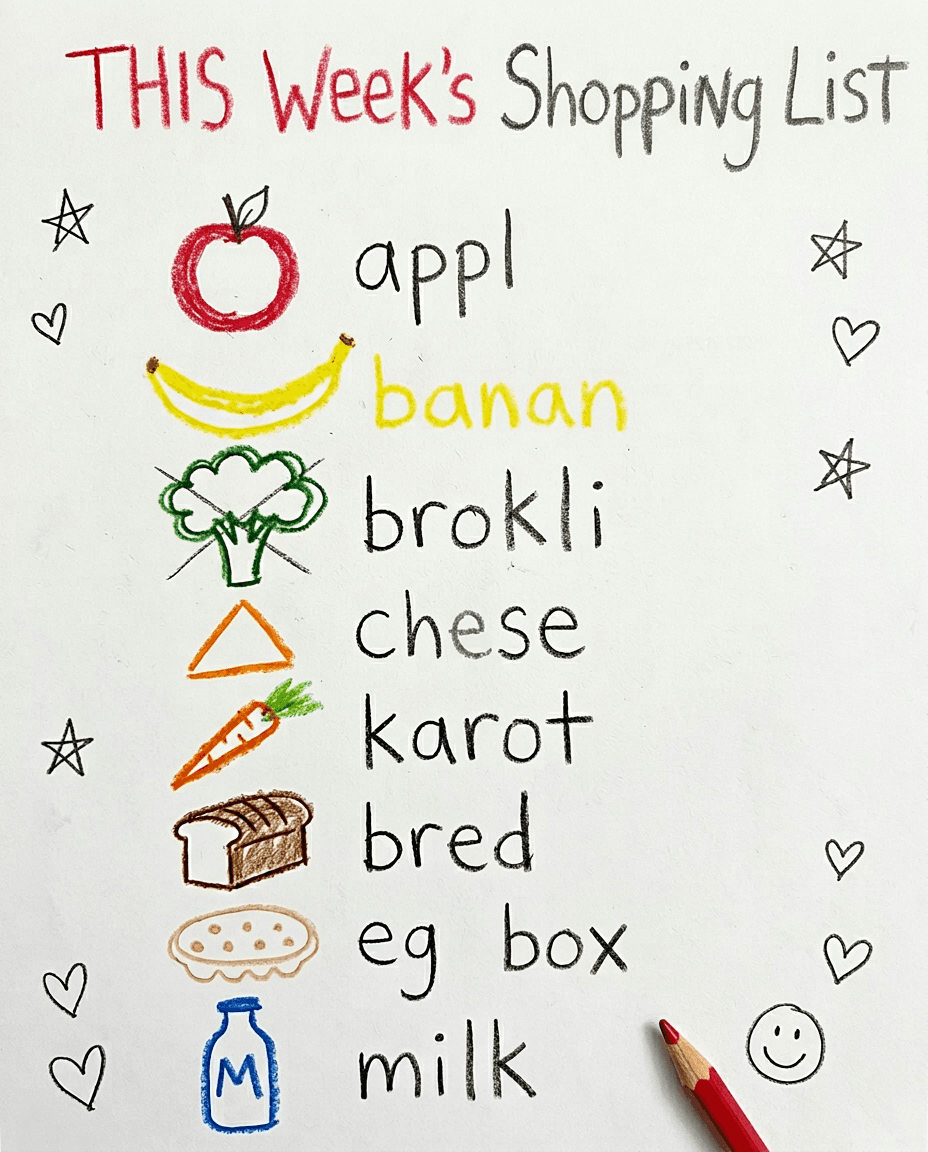
This is a slow, joyful hour where your child becomes the “family food designer” and you become their co-pilot. Together, you will first sit down to draw a colourful healthy food shopping list – turning fruit, vegetables, grains and proteins into characters, symbols or mini comics that feel playful and inviting instead of lecture-like.
Once the list is ready, you’ll head out to the shop or market and bring that drawing to life: matching each sketch to real foods on the shelves, reading labels together and letting your child help make choices that fit your family’s culture, budget and routines.
This activity turns an everyday chore into shared learning and laughter. Your child gets to feel seen and heard as the “expert” on what goes into the basket, while you hold the gentle structure around health, money and time. They are not just told what to eat – they experience autonomy, curiosity and pride in building a basket that nourishes everyone at home.
For families, this can become a weekly ritual: a moment away from screens where hands are busy drawing, voices are busy wondering “why is this cereal different from that one?”, and hearts are quietly reassured by the simple act of being side‑by‑side. You leave not only with groceries, but with a shared story: “Remember the broccoli tree we drew?” “Remember how you found the beans with the shortest ingredients list?” – tiny memories that, over time, stack into a deep sense of togetherness.
BEBOND Overall Score
🔆🔆🔆🔆
Age
Theme
What will your child experience?
BEBOND Score 43/60
Your child will experience the full journey from idea to action: imagining a healthy basket on paper, then confidently finding those foods in the real world. They practise curiosity, decision-making and self-belief, all wrapped in a fun, art‑filled outing with you.
Bond
Feels genuinely consulted about what the family eats, not just instructed.
Experiences you listening to their ideas (“Should we add mangos or apples?”), building trust and emotional security.
Explore
Asks questions about colours, labels, origins (“Where does this come from?”), naturally practising science and geography thinking.
Experiments with new foods in low-pressure ways (adding one new item to the list, smelling and exploring textures).
Build
Translates a drawn plan into action: matching pictures to products, navigating aisles and making trade‑offs.
Strengthens planning and problem‑solving (“We can’t find this, what could we choose instead?”).
Observe
Notices hunger/fullness cues and how different foods feel in their body, with your gentle guidance.
Reflects on the trip afterwards (“What did we enjoy? What do we want next time?”), building metacognition.
Nurture
Learns that choosing food is an act of caring – for their own body and for the people they love.
Practices empathy by including others on the list (“Let’s add grandma’s favourite yoghurt”).
Dream
Uses imagination to turn foods into characters and stories, making “healthy” feel exciting rather than restrictive.
Begins to picture themselves as someone who can cook, choose, and lead around food in the future.
What's in it for us, the parents?
BEBOND Score 41/60
You gain a calmer, more connected version of a routine task. Instead of rushing the shop alone or negotiating with a bored child in the aisle, you share a thoughtful, playful process that supports your own mental health, stress levels and sense of competence as a parent.
Bond
Shared drawing and shopping become regular touchpoints where you are truly present, which research links to better parental wellbeing and life satisfaction.
Co‑regulation in busy spaces (pausing, breathing, choosing together) helps you both downshift from daily stress.
Explore
Your child’s questions pull you into fresh curiosity about food, culture, labels and habits, giving your brain valuable novelty and cognitive stimulation.
You may discover new ingredients or ways of cooking that break routine and gently lift mood.
Build
Planning the list and organising the trolley together can feel like a small, achievable project – a mini “build” that offers flow, focus and tangible satisfaction.
Hands-on tasks (writing, drawing, sorting items) provide a grounding break from screen‑based mental load.
Observe
The activity invites natural mindfulness: noticing colours, smells, sounds, and tuning into how you both feel during the shop.
Short reflective chats on the way home (“What worked well today?”) mirror mindfulness practices shown to reduce anxiety and rumination.
Nurture
You experience direct purpose: “I am actively caring for my child’s long‑term relationship with food,” which is linked to lower stress and higher life satisfaction.
Small moments of self‑compassion are built in when things are imperfect (“We forgot something – that’s okay, we’ll try again next time”).
Dream
You get permission to be playful again – turning the list into art, inventing characters in the aisles – a kind of light, imaginative leisure shown to protect against burnout.
You can co‑imagine future family rituals (“One day you’ll design our whole weekly menu”), reconnecting with hope and shared direction.