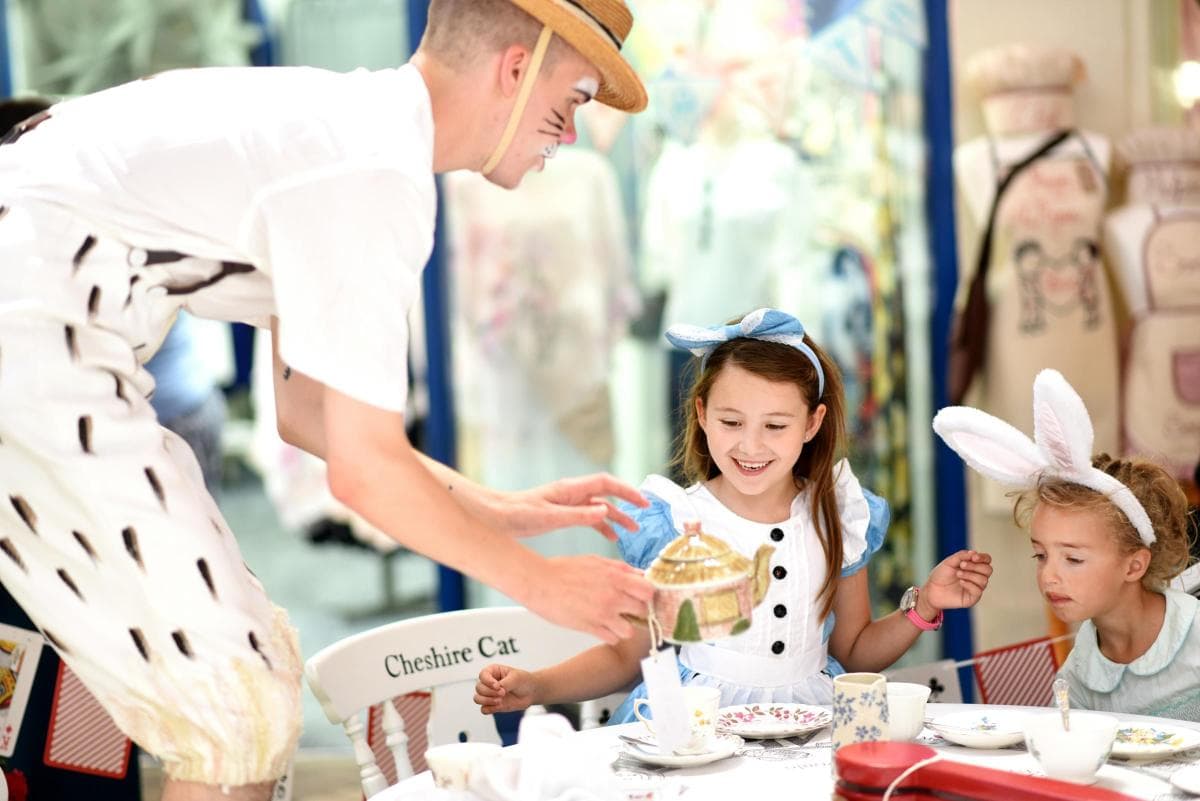
Alice Day - 4th July 2026
Description
July 4th 2026
Step through the looking glass together and spend a whole day wandering Oxford as a real‑life Wonderland. Alice’s Day 2026 is a city‑wide festival where families follow in the footsteps of Lewis Carroll and the real Alice Liddell, exploring stories, science, gardens and games across some of Oxford’s most magical spaces. From the moment you spot the White Rabbit on a trail map to the last sleepy journey home, this is a day built for being side‑by‑side – not just watching your child have fun, but sharing the wonder with them.
Across the city, venues including The Story Museum, Christ Church, the Museum of Oxford, the History of Science Museum, the Oxford Botanic Garden, the Weston Library, Alice’s Shop and more open their doors with Alice‑inspired activities. You might start with puppetry or theatre, wander through a botanic garden looking for “curious” plants, pause for storytelling or crafting in a museum, then finish with a hot chocolate and a debrief about your favourite characters. It’s one of those rare days where adults and children are equally invited to play, imagine and ask questions.
Because the celebration is rooted in a true story – that golden afternoon in 1862 when Charles Dodgson (Lewis Carroll) took the Liddell sisters boating on the Thames and spun the first Alice tales – your family isn’t just consuming a story, you’re walking through the places that inspired it. At Christ Church you can stroll the same hallways and gardens Alice knew, peek at the little door said to have led into Wonderland, and hunt for long‑necked figures and stained‑glass details that echo scenes from the book. Children get the thrill of “finding” story clues in the real world; parents get the pleasure of watching literature and history click into place in their child’s mind.
All day long you can dip into tea‑parties, croquet, trails, dance, games, talks and workshops, choosing the pace that works for your family. Younger children can revel in dressing up and simple imaginative play; older kids can dive into how a mathematician created such a strange, logical, illogical world, or how Oxford itself shaped the story. In between, there’s time simply to walk, talk and notice – from a tiny carved creature in a college chapel to a shop window full of Cheshire Cats.
Most of all, Alice’s Day is an excuse to be together in a way that feels easy rather than effortful. You’re not trying to entertain your child solo; the city does that for you, while you get to join in. Shared discoveries (“Did you spot that door?”), shared challenges (“Can we finish the trail?”) and shared quiet moments (a story, a snack, a sit on the grass) stack up into the kind of memories families look back on for years. It’s a one‑day festival – but the sense of curiosity, connection and playfulness it sparks can travel home with you long after you leave Oxford.
BEBOND Score
🔆🔆🔆🔆🔆
Age
Theme
County Location
Oxfordshire
Access
Drop-in Welcome
Approximate location
Select Date & Time
Select a date to see available time slots
What will your child experience?
BEBOND Score 47 / 60
For your child, Alice’s Day feels like stepping straight into a book and being invited to play a part. They move between museums, gardens and historic colleges, following trails, making things with their hands, listening to stories and inventing their own – all while you’re right there with them. It’s rich, multi‑sensory, gently educational and joyfully chaotic in all the best Wonderland ways.
Bond - 8 / 10
Side‑by‑side exploring, queue‑chatting, sharing treats and reacting together to performances and exhibits help your child feel deeply seen and accompanied in their excitement and questions.
Small everyday rituals throughout the day – holding hands in busy streets, reading a trail clue together, debriefing a show – reinforce their sense of safety and belonging.
Explore - 9 / 10
Trails through museums, college cloisters and the Botanic Garden invite children to follow clues, ask “why?”, and notice patterns between the real Oxford and the fictional Wonderland.
Moving between venues, mapping routes and choosing “what next?” lets them practice decision‑making and fuels natural curiosity about history, nature, science and story.
Build - 6 / 10
Hands‑on activities like crafting, costume elements, simple props, or writing and drawing their own Wonderland scenes give children chances to make something tangible from their imagination.
Piecing together story fragments from different locations (a door here, a stained‑glass window there, a shop full of Alice objects) strengthens narrative skills and problem‑solving.
Observe - 8 / 10
Watching theatre, puppetry and live storytelling helps children practice focused attention and reading social and emotional cues in performers and audiences.
Quiet museum moments – looking closely at historic objects, illustrations and architectural details – train them to slow down, notice subtleties and reflect on what they’re seeing and feeling.
Nurture - 7 / 10
The themes at the heart of Alice – bravery, feeling small, making mistakes, finding your voice – can resonate deeply and open gentle conversations about emotions, fears and growing up.
Moving at a family‑friendly pace with built‑in breaks for snacks, rest and calm spaces in gardens or libraries models caring for the body and nervous system during exciting days out.
Dream - 9 / 10
Immersive storytelling, dressing up, meeting larger‑than‑life characters and playing croquet or tea‑parties in real spaces invite full‑body imaginative play.
Your child gets to imagine themselves as Alice, the White Rabbit or even the author, inventing new twists to the story and carrying that creative confidence into their own games and projects.
What's in it for us, the parents?
BEBOND Score 43 / 60
This isn’t just “for the kids”. Alice’s Day offers parents a low‑admin, high‑reward way to reconnect with their own curiosity and sense of play while someone else has done the planning. You get time outdoors, gentle movement, stimulating conversation and the rare pleasure of enjoying culture that genuinely entertains both adults and children.
Bond - 8 / 10
Moving through the day as a team – planning routes, sharing decisions, laughing at in‑jokes from the story – strengthens your sense of togetherness and shared identity as a family.
Being fully present with your child in an environment that’s designed to delight them can be surprisingly restorative, lowering stress and deepening emotional attunement.
Explore - 8 / 10
Exploring different corners of Oxford, some of which you may never have visited, gives your own brain novelty, fresh perspectives and a break from routine.
Following your child’s questions about history, science, faith, nature or storytelling turns the day into a living seminar that keeps your own curiosity and cognitive “muscles” active.
Build - 5 / 10
Logistical “micro‑builds” – reading maps, sequencing activities, solving small problems together (weather, queues, energy dips) – exercise your executive skills in a playful rather than pressured context.
Collaborating on crafts or story‑making with your child can drop you into a flow state that feels satisfying and mentally refreshing.
Observe - 7 / 10
Watching how your child responds to different settings – busy performances vs. quiet galleries, structured workshops vs. free play – gives you rich data about their emerging interests and needs.
The reflective tone of some talks or exhibits can also prompt you to observe your own reactions and values around books, education, imagination and tradition.
Nurture - 7 / 10
A day designed around walking, fresh air, gentle activity and shared pleasure supports your own nervous system as much as your child’s.
Small acts of care – packing snacks, adjusting the plan when someone is tired, finding a calm corner in a garden – reinforce your sense of competence and kindness as a parent, rather than just “managing logistics”.
Dream - 8 / 10
Being immersed in a world where nonsense is welcome and imagination is celebrated can loosen the grip of everyday worries and reconnect you with your own childhood loves.
The creativity on display – from historic illustrations to modern performances – can re‑spark your appetite for books, art, writing or future family adventures.