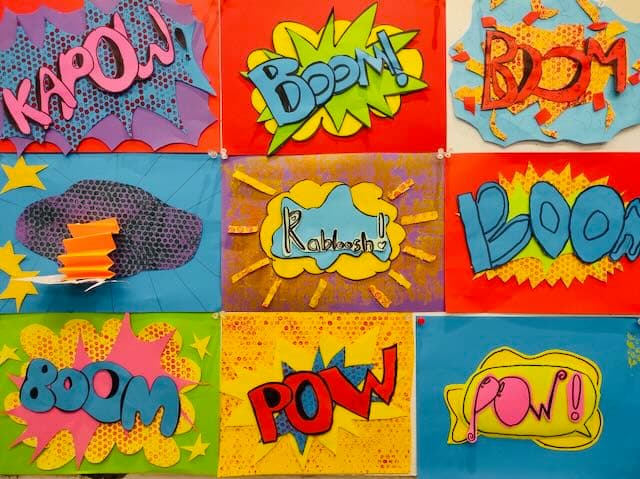
Creative Fun for Children - 10-weeks art course for children aged 8 to 10
Description
In this lively after‑school class, kids experiment with paint, drawing, collage, and mixed media in a relaxed, small‑group studio setting at Sunningwell School of Art.
This is a 10-weeks art course, starting Tuesday 14th April 2026
The course runs every week until Tuesday 23rd June 2026
Guided by an experienced art tutor, children try out new tools and techniques each week, building skills without losing the joy and spontaneity of making a mess and turning it into something they are proud of. Working alongside other young makers, they share ideas, talk about each other’s work and slowly discover their own visual voice, all within a warm, village‑school atmosphere that feels safe, friendly, and creative.
Nested in picturesque Sunningwell, the Sunningwell School of Art is a real art studio. Creativity is literally in the air - with every brush stroke new possibilities are born.
BEBOND Score
🌱 4/6
Age
Theme
County Location
Oxfordshire
Access
Booking Required
Approximate location
Select Date & Time
Select a date to see available time slots
What will your child experience?
BEBOND Overall Score - 44 / 60
Your child will spend 90 minutes in a real art school studio, with space to try, fail, adjust, and try again, supported by a tutor who cares more about curiosity than perfection. They leave with inky fingers, colourful artwork, and a quiet sense of “I can do this” that often slips into other parts of life too.
Bond - 7 / 10
Gentle one‑to‑one attention from the tutor helps your child feel seen and encouraged, especially when they try something new or tricky. Working in a small group builds peer connection and confidence in sharing ideas and giving kind feedback on each other’s work.
Explore - 8 / 10
Your child is introduced to a wide range of materials and techniques, inviting “what happens if…?” experiments rather than fixed outcomes. And because they will tackle new projects each week their curiosity remains high, so they experience art as an ongoing adventure rather than a single “lesson”.
Build - 7 / 10
Planning compositions, layering media and solving small problems (smudges, colour choices, structure) strengthen your child’s practical problem‑solving and focus. Completing pieces over one or more sessions nurtures persistence and pride in creating something from start to finish.
Observe - 7 / 10
Your child is encouraged to look closely at shapes, colours, light and textures in reference images and their own work.
Simple reflective prompts - “What worked well here?”, “What would you try differently?” - support early metacognition and self‑awareness.
Nurture - 7 / 10
A non‑judgemental studio culture helps your child make peace with mistakes and practice self‑kindness when things don’t go as planned.
Collaborative tidy‑up, sharing materials and respecting others’ work build everyday empathy and care for shared space.
Dream - 8 / 10
Open‑ended briefs invite imagination, storytelling and personal themes, so children can turn their interests into images. Playful, low‑pressure making time gives our children the mental space to daydream and experiment with new ideas without fear of “getting it wrong”.
What's in it for us, the parents?
BEBOND Overall Score - 35 / 60
We, parents, gain a regular pocket of time while our children are immersed in purposeful creativity, plus a steady stream of conversation starters and fridge‑worthy or even frame-worthy artwork that open up richer chats at home. Over a term, we see their confidence and focus grow, giving us more to notice, celebrate, and reflect on together.
Bond - 6 / 10
Finished pieces and sketchbook pages become easy prompts for connection: “Tell me about this part” can turn pick‑ups and dinner time into low‑effort bonding moments. Watching our children take creative risks gives us new stories to share together, strengthening our sense of being “on the same team”
Explore - 6 / 10
Through this journey, we are likely to be exposed to artists’ names, techniques and materials via our children’s projects, which can spark museum trips, library hunts or at‑home experiments. Hearing how the class runs may nudge us to revisit our own creativity or try a course ourself, refreshing our busy adult world.
Build - 5 / 10
Supporting our child to find a place to store work or set up a small making corner at home can become a simple joint project, strengthening routines and organisation. It reveals how they approach challenges and perfectionism in art, which can inform how we coach them through homework or other tasks.
Observe - 6 / 10
The class gives us something concrete to watch over time: changes in how our children talk about mistakes, effort and pride. Pick‑ups and term‑end displays invite us into quiet moments of watching our child absorbed in something that is purely theirs, which can be truly grounding and perspective‑giving.
Nurture - 6 / 10
Knowing our children are at Sunningwell School of Art - a calm, kind environment - can ease everyday worry and guilt, supporting our own emotional wellbeing.
Their developing self‑compassion around “wonky bits” can soften our own inner critic as we model kinder self‑talk together.
Dream - 6 / 10
Our children’s imaginative projects can open up future‑oriented conversations at home: “What would you like to learn next?” or “If you could design anything, what would it be?”. Watching a talent or passion emerge can gently expand our own sense of what’s possible for our family’s future adventures.