Pasta Art at Home
Description
Making art with pasta offers a delicious fun moment to play, talk and bond with your child.
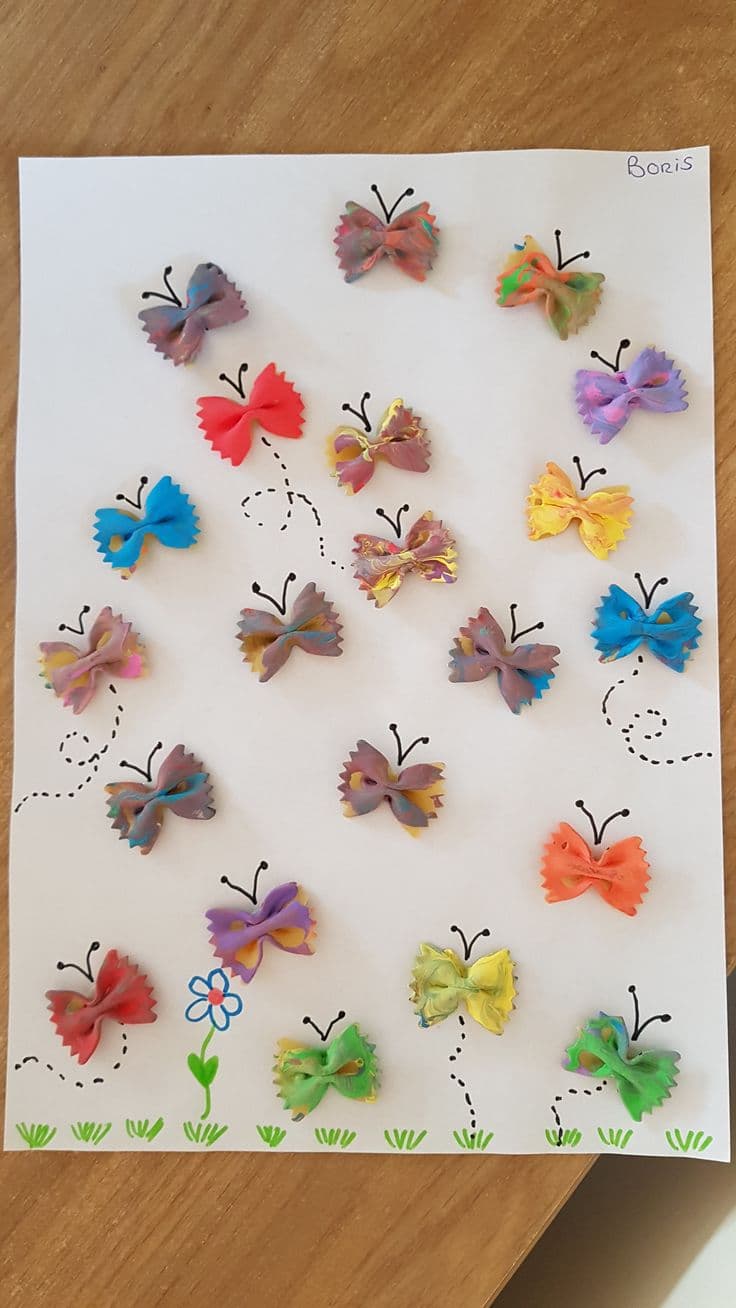
Turn dry pasta into colourful butterflies, flowers, and trees using paint and glue on paper or canvas. Together, you can sort and paint different pasta shapes (e.g., bow ties as butterflies, tubes as tree fruits, spaghetti as grass). Then your child can arrange them into a simple scene such as a butterfly meadow or blossom tree, adding pen or crayon details. You could help there too.
This experience combines hands-on making, choice of colours and layouts, and shared conversation about nature, seasons, or feelings. It supports fine-motor skills, creativity, planning, and patience for the child, while offering you, the parent, a calm, absorbing, screen-free moment of connection that feels more like playful “craft therapy” than a chore.
What do you need?
Dry pasta: bow-tie (farfalle) plus a few other shapes for flowers/leaves.
Thick paper or light canvas, PVA / school glue, small paintbrushes.
Child-safe paints (poster or acrylic), cup of water, paper plate/palette.
Marker pens / crayons for stems, flight paths, grass, sky, etc.
Optional: apron, table cover, cotton buds for dot details.
BEBOND Score
🌱 4/6
Age
Theme
County Location
To do at Home
Access
Home based
No dates currently available
What will your child experience?
BEBOND overall score 42 / 60
In this colourful pasta‑art activity, your child will explore textures, plan their picture, and practice mindful observation and gentle self‑correction. This is a balanced activity for your child and for you.
Bond - 8 / 10
Warm, side‑by‑side creating where the child feels seen in their colour choices, ideas, and stories about the scene, strengthening emotional security and shared joy.
Explore - 6 / 10
Gentle experimentation with new textures (dry pasta, wet paint), colour mixing, and trying out where pieces might fit best, feeding curiosity and problem‑solving.
Build - 8 / 10
Planning where to place elements, using fingers to grip and orient small pieces, and persisting when things wobble or need re‑gluing, all of which exercise executive function and fine‑motor control.
Observe - 7 / 10
Watching how paint spreads, how glue dries, and noticing small details on butterflies or leaves, fostering present‑moment attention and the pause before action.
Nurture - 6 / 10
Creating a gentle world of trees, flowers, and creatures invites talk about caring for nature and handling “mistakes” kindly (e.g., turning a paint smudge into a new flower), building empathy and self‑compassion.
Dream - 7 / 10
Imagining stories about the butterflies’ journeys or the magical tree opens space for pretend play, narrative thinking, and hopeful “what if?” conversations.
What's in it for us, the parents?
BEBOND overall score 39 / 60
This simple pasta‑art project offers you calm, screen‑free bonding time, gentle curiosity, and flow‑like creative focus that supports your own mental health and resilience.
Bond - 8 / 10
Low‑pressure, screen‑free time where you share focus on the same small task supports co‑regulation, lowers stress, and leaves you feeling more connected and emotionally topped up rather than drained.
Explore - 5 / 10
Trying a simple new technique (using pasta as art material) lightly stimulates your own curiosity and sense of competence, which helps protect cognitive health over time.
Build - 7 / 10
The repetitive, hands‑on nature of painting and placing pieces can draw you into a mild flow state, easing rumination and offering a pocket of “craft calm” in the day.
Observe - 7 / 10
Slowing down to really watch your child concentrate and to notice colours and textures functions like an everyday mindfulness exercise, associated with reduced anxiety and better emotional regulation.
Nurture - 6 / 10
Supporting your child through sticky fingers and small frustrations is an active practice of empathy and self‑compassion, which research links to lower stress and higher life satisfaction in adults.
Dream - 6 / 10
Letting yourself join in the playful storytelling around the artwork re‑awakens your own imagination, a proven buffer against burnout and a route to renewed energy and perspective.